Never Ignore Stock Markets
At the start of every New Year, there are a series of articles focused on which asset class is likely to do well for the next 12 months. There are two fundamental problems with such a discussion: It limits the time frame of the discussion to the next 12 months. This is tantamount to projecting what your child will grow up to be like based on what he ate for breakfast this morning; There is a false assumption that, though you may be guided into the right asset class by your private client wealth advisor, you will be sold the correct specific investment as opposed to the instrument which pays the wealth advisor the highest commission. This is tantamount to saying that because your child goes to school he actually learns something useful on how to deal with life. Stocks are risky, but can make you money Since January 1981, ...
Four Things to Remember about Sensex at 21000
The benchmark BSE-Sensex is back at 21,000 levels. And suddenly there seems to be a rush of enthusiasm amongst market participants. Just to recall, the first time the Sensex had touched the 21k level was in January 2008. Then as we know, the markets crashed in response to the global financial crisis. Then again in November 2010, Sensex again hit the 21k level. And again the markets tanked after scaling that level... So the one obvious question on everyone's mind is ' Where will the Sensex go from here? Will it tank? Will it scale new highs? What is the answer? We beg to differ in our perspective of this entire situation. In our view, the question itself is flawed. For one, the 21k level denotes nothing more than a mere psychological point. Investors have seen the Sensex scaling this level and then correcting sharply. So there is a collective ...

ARE TAX-FREE BONDS, BEING ADVERTISED NOW, SUITABLE FOR YOU?
When we sent a promotional mail to our subscribers few days back, we received a good response for these bonds including from some very young persons. We quizzed some of them and found that they really did not understand the actual nature of these bonds. We were actually able to dissuade some of them not to apply for them while rang up some older subscribers to get to subscribe to them. Given below are clarifications on what are these bonds and to help you decide if they are for you:- What is the Buzz about these Bonds? This financial year (FY 2013-14), the Govt has allowed Nine Public Sector Units (PSUs) to issue tax-free bonds totalling Rs 48,000 Crores. Rural Electrification Corporation (REC) has already finished with one such offering, while HUDCO (Housing and Urban Development Corporation) is in the market with their issue currently. Others will also come subsequently ...
Rajiv Gandhi Equity Saving Scheme (RGESS): Is It For You?
Dear Friends, We had given a mail to you all yesterday highlighting salient aspects of Budget FY 2013-14 of concern to you. We received a lot of queries on the same, most of them pertaining to RGESS. People primarily want to know if RGESS can help them save additional tax. We demystify the same below. 1. Why RGESS? Ans: Indians are very good money savers but their maximum money is locked-up in low yielding debt products like Provident Funds (EPF, PPF, DSOPF), bank FDs / RDs, Post Office schemes, NSC / KVP / SCSS etc. The Govt had announced a scheme called ‘Rajiv Gandhi Equity Saving Scheme 2012’ (RGESS) last year with an objective of encouraging new retail investors to route their savings into the domestic capital market. Since tax-saving is a big driver for Indians, the Govt has tagged a small tax-saving incentive also to it. 2. Who is ...

Are you an Investor or a Collector of Investments
Very often, we have prospective financial planning customers walking into our office with a bagful of certificates – insurances, stocks, mutual fund statements, bank fixed deposits, company deposits, recurring deposits, provident funds, bonds and what-have-you. While visibly these people grumble about the variety they have collected over the years out of various compulsions, we can still feel their enthusiasm to be akin to that of a child displaying his autograph collection of cricketing stars. Some people get into this habit of tracking the 10 hottest investments of the year through unending commentaries on TV, newspapers, magazines and even sms. Before they know it, they have a huge collection of performers of yester-years which have no correlation to financial goals of their life. It is very important to understand that each investment you make should weave and blend into the fabric of investment umbrella that you are creating for your family ...
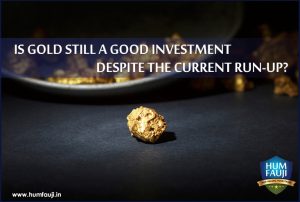
IS GOLD STILL A GOOD INVESTMENT DESPITE THE CURRENT RUN-UP?
Gold has, since time immemorial, allured mankind. While initially, the lure might have been due to its timeless lustre, in modern (and more material!) times, it has been due to Gold proving itself to be a storehouse of value, which refuses to get cowed down by the economic, political and financial gyrations of the nations the world over. In fact, the more such uncertainties, the more has Gold appreciated in value!! Gold as a Metal The rarity of Gold is such that industry pours more steel in an hour than the total of all the Gold poured since the beginning of recorded time. China is the fastest-growing market for Gold jewellery in the world, accounting for 377 tonnes of demand in 2010. Chinese consumers look for the very highest level of purity; more than 80% of Gold jewellery in China is made from pure 24 carat Gold. In today's China, ...

Diversification of Your Investments- Don’t Put All Your Eggs In One Basket
We frequently come across individuals who are very finance-savvy but have taken a fancy to one particular asset-class and are totally convinced that it is the best one to sail them through their life. This bias is seen mostly in real-estate investments and in equity investments(stocks or shares, as they are variously called). Unmindful of the danger it poses to their long-term goals, they continue to invest all their investible suplus in their favoured avenue without caring about one of the Golden Rules of Investment - Diversification of assets. What is diversification? Diversification means spreading your investments over a number of investment avenues. Why do we need to diversify our investments? Why should we not put it all in only one type of investment which we think is the best? Let’s look at the example below. A man wants to sell eggs to buyers in the city. He will carry ...
ARE YOU INVESTING & MANAGING YOUR MONEY RATIONALLY?
Errors Investors Repeatedly Make in Choice of Investment and Timing Behavioural Finance is a very interesting field of psychology. It studies and analyses the reaction of people and their bias when faced with investment decisions. Please read the instances given below – do you relate yourself to any one or more of them? You have your investments in various stock-related instruments – equity and equity-diversified mutual funds. Some of these are in profit while some are in loss currently. You need some money urgently. You sell the profit making ones. Effectively you have sold the ones doing well since you keep hoping that you will ‘recover back your loss’! This explains why people realize the gains of winning stocks too soon. The flip side of the coin is people hold on to losing stocks for too long; unfortunately, many of the losing stocks never recover, and the losses incurred continued ...