Are Guaranteed Returns Really Safe?
“Guaranteed returns.” Just hearing the phrase feels comforting — no ups and downs, no market stress, complete peace of mind.
Fixed Deposits, traditional insurance plans, government schemes, and certain bonds promise predictability. Your capital feels protected, and returns are known in advance. Sounds perfect, right?
But there’s a silent guest at the table — inflation.
If your FD earns 6% while everyday costs rise by 6–7%, your money grows on paper, but not in real life. Over time, inflation erodes purchasing power, meaning your money may buy less in the future despite appearing safe.
Another limitation is flexibility. Many guaranteed-return products — especially insurance plans sold as investments — restrict liquidity and penalize early withdrawals, reducing financial freedom when needs or better opportunities arise.
Guaranteed returns are not bad. They are useful for emergency funds, short-term goals, and conservative investors. However, they are not enough for long-term wealth creation, retirement, or major life goals on their own.
True financial safety isn’t about avoiding risk completely — it’s about managing it wisely. A balanced approach combining stable instruments with growth assets like equity helps beat inflation and protect your lifestyle.
(Contributed by Aman Goyal, Relationship Manager, Team Vikrant, Hum Fauji Initiatives)
👉 Want to build a balanced, inflation-proof plan? Speak to a financial planner at Hum Fauji and make your money truly work for you.
Not Inflation Alone: How a Weak Rupee Raises Your Costs
You walk into a store and notice prices are higher again. Naturally, you blame inflation — but another quiet force works behind the scenes: a weak rupee.
What Does a “Weak Rupee” Mean?
Simply put, the rupee buys fewer dollars. If ₹80 once bought $1 and today it takes ₹91, that extra ₹11 shows up in the prices you pay.
How It Affects Everyday Life
- Fuel: Crude oil is priced in dollars → petrol and diesel become expensive
- Food: Imported oils, pulses, and fertilizers cost more
- Electronics: Smartphones, laptops, and appliances see price increases
- Foreign education & travel: Fees, flights, and living costs rise sharply
Think of it like shopping with a shrinking wallet — you buy the same things, but the total bill keeps rising.
Inflation pushes prices from within the economy. A weak rupee pushes costs from outside through imports.
Key Takeaways
- Not every price hike is pure inflation
- A weak rupee quietly increases expenses
- Understanding this helps you budget and invest better
(Contributed by Prerna Pattanayak, Relationship Manager, Team Sukhoi, Hum Fauji Initiatives)
👉 Don’t let silent risks eat into your savings. A balanced financial plan makes all the difference.
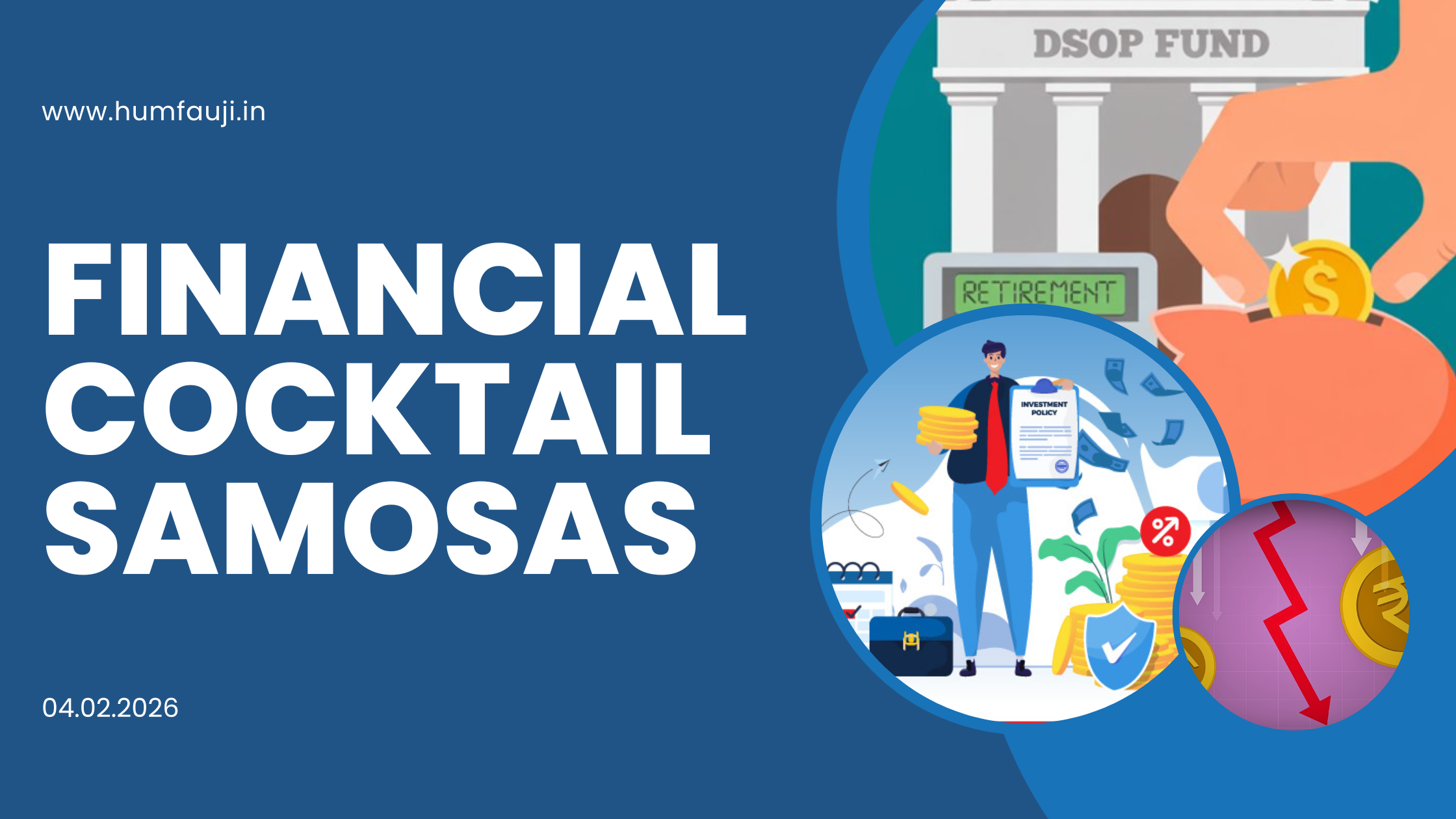
Mastering DSOPF: What Every Officer Must Know
Every month, a portion of a serving officer’s salary moves into a savings account that plays a decisive role during service and at retirement — the Defence Services Officers Provident Fund (DSOP Fund).
The DSOP Fund is a compulsory savings mechanism for commissioned officers governed by Ministry of Defence regulations and aligned with GPF and Income-tax rules.
- Minimum contribution: 6% of monthly emoluments
- Higher voluntary contribution allowed
- Total annual contribution (including arrears): up to ₹5 lakh
Why DSOP is Dependable
DSOP offers a government-notified interest rate credited annually. There is no market volatility — only capital safety and steady compounding.
Liquidity & Flexibility
- Housing
- Children’s education
- Medical treatment
- Marriage
- Pre-retirement needs
Tax Benefits
- Contributions up to ₹5 lakh are tax-exempt
- Interest earned is tax-free within limits
- Interest on excess contribution becomes taxable
At retirement, the accumulated corpus becomes a valuable financial cushion.
(Contributed by Avantika Agarwal, Financial Planner, Team Sukhoi, Hum Fauji Initiatives)
👉 DSOP builds your retirement base — plan the rest with equal precision.
Client Question of the Week
Question: Given global geopolitical tensions and market correction, should I increase allocation to defensive assets like debt and gold?
Our Perspective
Debt and gold act as shock absorbers during uncertain phases, helping reduce volatility and provide stability. A measured increase in defensive allocation can make sense — but protection works best when planned, not rushed.
Sudden changes based on news-driven anxiety may disrupt long-term goals. Portfolio shifts should come from structured rebalancing aligned with risk profile and objectives.
Equity remains the engine of long-term growth. Exiting equities completely may lead to missed recovery and growth opportunities.
The Right Approach: Balance
Let defensive assets provide stability while equities drive long-term growth. This balanced strategy keeps portfolios resilient across market cycles.
Financial Insight: Defensive assets don’t remove risk — they help manage it wisely.
(Contributed by Team Sukhoi, Hum Fauji Initiatives)
👉 Markets change. Goals shouldn’t. Revisit your asset allocation with a long-term perspective — Ask Us How, What, and Why.