
What Should Investors Do During Geopolitical Conflicts?
Weekly Investor Note | March 2026
Dear Investors,
Over the past week, many of you have reached out with the same question:
What should investors do in the middle of a geopolitical conflict like the one we are witnessing today?
Such situations naturally create anxiety. Headlines change rapidly, and markets react just as quickly. However, moments like these require us to step back, assess facts calmly, and make decisions based on long-term perspective rather than short-term fear.
The Situation This Week
Global markets have been navigating an evolving geopolitical situation in West Asia following the conflict between the United States and Iran that began at the end of February.
Military strikes, retaliatory drone and missile attacks, and rising regional tensions have kept investors cautious.
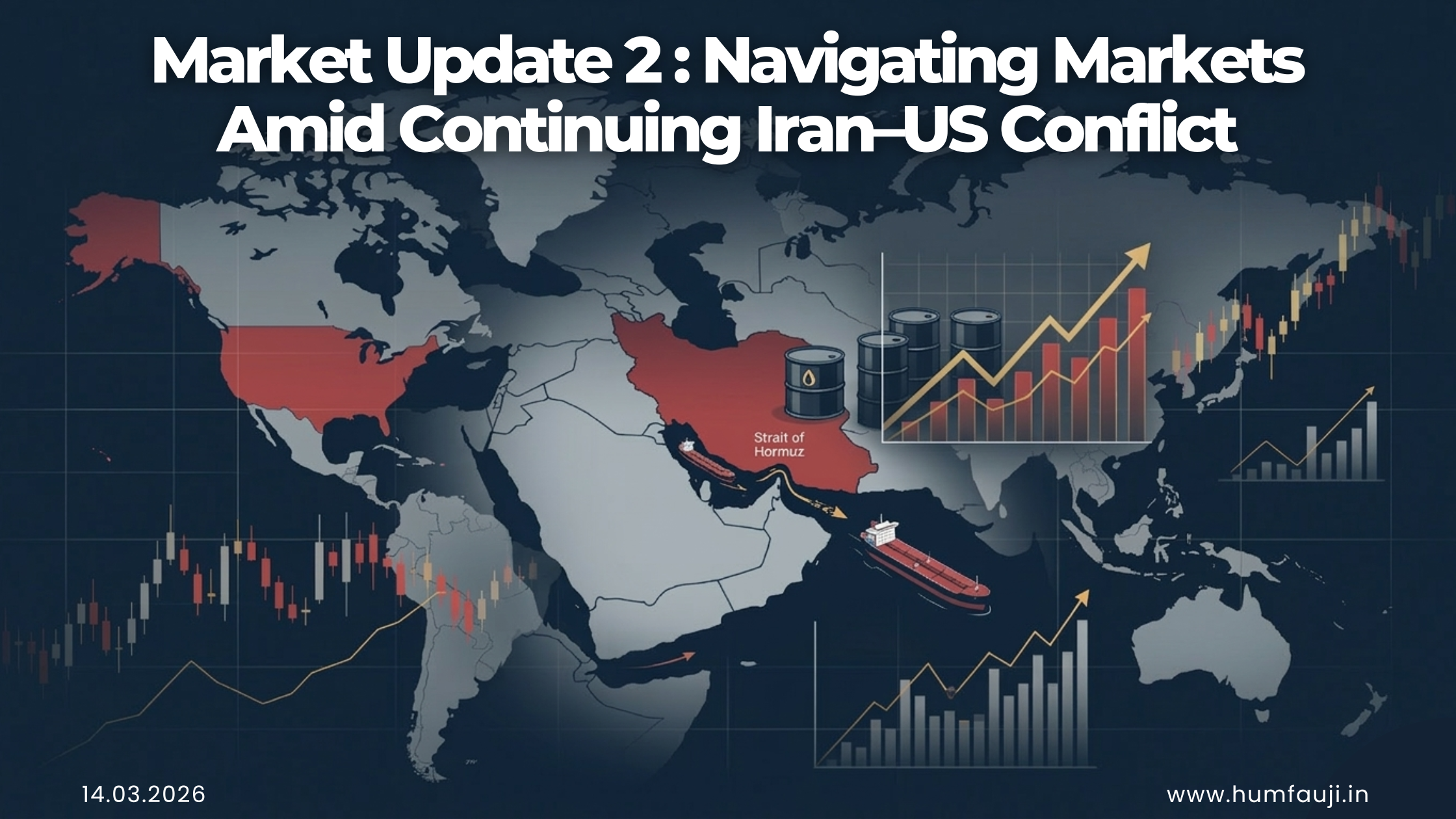
One of the most critical developments has been concerns around shipping through the Strait of Hormuz — a key global oil supply route.
A significant portion of global crude oil exports passes through this narrow passage. Any disruption here directly impacts energy markets. Recent concerns around tanker safety and temporary shipping disruptions have pushed Brent crude prices close to $100 per barrel, the highest level in years.
As oil prices rise sharply, global markets tend to react due to potential impacts on inflation and economic growth expectations.
This has led to increased volatility across global equities, including Indian markets.
Understanding Market Behavior
Historically, markets react most strongly when uncertainty is at its peak — especially in the early stages of geopolitical conflicts.
Once clarity emerges regarding the scale and duration of the situation, markets often stabilize — even if the conflict continues.
In simple terms: markets fear uncertainty more than the conflict itself.
Why Oil Matters for India
For India, the most important variable to watch during this period is crude oil.
India imports over 80% of its oil requirements, making it sensitive to sustained price increases.
Rising oil prices can impact:
- Inflation
- Current account deficit
- Currency stability (Rupee)
- Corporate margins in sectors like aviation, logistics, and manufacturing
However, global systems are designed to handle such disruptions. Strategic reserves and coordinated policy actions often help stabilize supply.
In fact, the United States and the International Energy Agency have already announced plans to release significant oil reserves to moderate price spikes.
This reduces the risk of temporary disruptions turning into long-term economic damage.
Where Markets Stand Today
- Nifty 50: Valuations have corrected from 24.4x to ~20.9x, now ~11% below the 10-year median
- Nifty Midcap 150: Strong earnings growth (~37.5%) has normalized earlier elevated valuations
- Nifty Smallcap 250: Valuations have corrected nearly 25%, moving closer to historical averages
What Should Investors Do?
- Avoid Panic Selling
Temporary geopolitical events rarely change the long-term value of strong businesses. - Invest Gradually
Deploy capital in staggered tranches instead of trying to perfectly time the market. - Focus on Quality
Companies with strong balance sheets, competitive advantages, and consistent earnings growth tend to recover faster. - Maintain Diversification
A well-diversified portfolio across sectors and market caps reduces risk during volatile periods.
A Look at History
Geopolitical crises are not new. Events like the Gulf War, Iraq War, and other regional conflicts initially caused sharp market reactions.
However, in most cases, markets stabilized and recovered as clarity improved.
Final Perspective
The current situation may continue to create short-term volatility, especially if oil prices remain elevated.
However, it does not change the long-term growth trajectory of the Indian economy or the structural opportunities within Indian equities.
For disciplined investors, uncertainty often creates opportunity.
The key is to remain patient, stay diversified, and continue investing with a long-term mindset.
With warm regards,
Your Investment Team



Leave a Reply