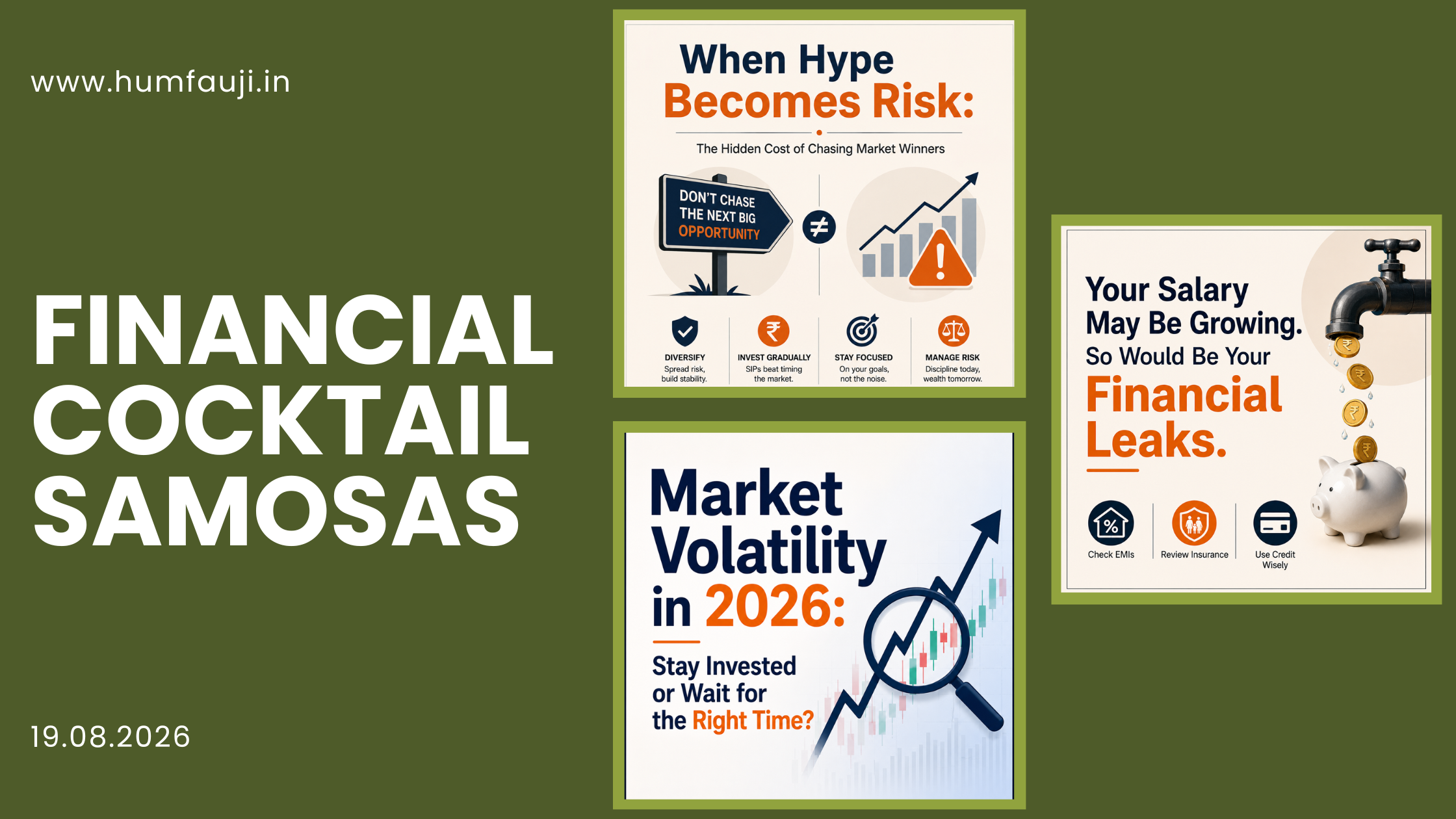
When Hype Becomes Risk: The Hidden Cost of Chasing Market Winners
Imagine your friend tells you, “I made 60% returns in just a few months!”
Suddenly, everyone around you is talking about the same investment. News channels call it the next big opportunity, social media is full of success stories, and you begin to wonder, “Am I missing out?”
So, you invest – not because you understand the investment, but because everyone else seems to be making money.
Sounds familiar?

When Excitement Takes Over
This is exactly what happened recently in AI-led markets such as South Korea and Taiwan. As excitement around artificial intelligence grew, stock prices soared and attracted investors chasing quick returns. But markets have a way of reminding us that optimism alone cannot support prices forever.
Within just a month, some AI-focused segments corrected by nearly 40%, leaving many late investors with significant losses.
⚠️ The Myth Vs Reality
Myth: The best-performing market today will keep delivering the highest returns.
Reality: Markets move in cycles. Strong rallies are often followed by corrections, especially when expectations become too optimistic. By the time an investment becomes the talk of the town, much of the upside may already be behind it.
💡 The Better Way to Invest
Successful investing is not about chasing the latest trend – it’s about managing risk. A diversified portfolio, investing gradually through SIPs, and staying focused on long-term goals are far more effective than trying to catch every market fad.
Remember: It’s easy to chase hype. It’s much harder to manage the risk that follows. Discipline – not excitement – is what builds long-term wealth.
Are you chasing returns? Review your Portfolio
Your Salary May Be Growing. So Would be Your Financial Leaks.
Most people believe wealth is created by earning more. But often, wealth is lost without anyone noticing.
Not through bad investments. Not through market crashes.
But through small financial leaks that silently drain your monthly cash flow.

Think about it.
- A home loan taken five years ago at a high interest rate and never reviewed.
- An insurance policy that’s expensive but no longer suitable. Still never reviewed.
- A credit card bill where only the minimum amount is paid unmindful of the interest it is charging.
1. Are Your EMIs Higher Than Needed?
Interest rates change over time, but many borrowers continue existing EMI without reviewing. A simple loan balance refinancing at a lower interest rate can significantly reduce monthly outgo.
2. Is Your Insurance Protecting You?
Insurance is meant to safeguard your family’s future not strain your monthly budget. Many people continue with unsuitable policies that offer limited benefits at high cost. A periodic review ensures you have the right coverage.
3. Are Credit Card Charges Stealing Your Wealth?
Paying only the minimum amount due may seem convenient, but it comes at heavy cost. High interest charges can quickly snowball into a debt trap. Paying your dues on time and using credit wisely.
The Real Opportunity
Many investors spend years searching for investments that can earn an extra 2–3% return. Far fewer spend time eliminating avoidable costs that offer an immediate, risk-free improvement to their financial health.
Sometimes, building wealth isn’t about finding the next multi-bagger – it’s about ensuring your hard-earned money isn’t quietly slipping away.
Market Volatility in 2026: Stay Invested or Wait for the Right Time?
The first half of 2026 has reminded investors of one timeless lesson: Markets are unpredictable.
Global uncertainty, elevated interest rates, FII selling and profit booking have kept markets volatile. Yet history shows that investors often lose more by trying to time the market than by staying invested.

What does history tell us?
- Missing just the 10 best trading days can reduce long-term returns by nearly 50%.
- Around 76% of the market’s strongest days occur during bear markets or shortly after recoveries, making market timing extremely difficult.
- Despite several crises, the Nifty 50 has delivered around 12% annualised returns over the past decade for investors who stayed invested.
What are savvy investors doing?
Despite the volatility, experienced investors continue to show confidence.
- Equity mutual funds received over ₹23,500 crore in inflows in June 2026.
- SIP contributions remained near an all-time high at ₹31,781 crore.
What should you do?
- Continue your SIPs.
- Rebalance if your asset allocation has drifted.
- Stay diversified.
- Maintain an emergency fund.
Remember: The biggest rewards rarely go to investors who perfectly time the market – they go to those who remain invested through every market cycle.
Every mission needs a strategy. Your wealth deserves one too. Hum Fauji helps you navigate every market cycle with confidence and discipline.
Should you stay invested or wait?
What did our client ask in the last 7 days
Question –
While filing my Income Tax Return, I noticed my mutual fund gains are much higher than expected. Is there any way I could have reduced the tax?
Our Reply –
One of the biggest misconceptions in investing is that tax planning begins when you start filing your Income Tax Return. It doesn’t.
By the time you’re filing your ITR, the tax has already been created. The real opportunity to save tax exists before you redeem your investments. Think of it this way:
You don’t pay more tax because your mutual fund performed well. You often pay more tax because your withdrawal wasn’t planned.

Here are a few tax-smart strategies:
- ✅ Harvest your capital gains: If your long-term capital gains are within the tax-exempt limit for the financial year, you can consider redeeming and reinvesting your units. This resets your purchase price and may reduce future tax liability.
- ✅ Avoid lump-sum redemptions: If your cash requirement is flexible, consider staggering withdrawals across two financial years. Splitting a redemption between March and April can sometimes result in a lower overall tax liability than withdrawing the entire amount in one financial year.
- ✅ Set-Off Losses Correctly: Use short-term capital losses against both short-term and long-term gains, but remember that long-term losses can only offset long-term gains.
Remember**, A successful investment isn’t judged only by the return it generates. It’s judged by how much of that return you actually keep after taxes.
Many investors spend years selecting the right mutual fund but only a few minutes planning their exit strategy. Often, that is where unnecessary taxes arise.
Am I Paying More Tax Than I Need To?