Can Playing It Too Safe Hurt Your Retirement?
You saved for decades. You avoided unnecessary risks. You chose FDs, SCSS and other fixed-income investments because you wanted your retirement money to be safe.
But could being too safe create another risk? Inflation.
For many retirees, these familiar investments provide stability and predictable income. However, protecting your money’s value is equally important.
Consider These Indicative Annual Returns
| Investment | Annual Return | Return After Tax (25% Bracket) | Return After Inflation of 6.5%* |
|---|---|---|---|
| SCSS | 8.20% | 6.15% | 0.35% |
| PPF | 7.10% | 5.33% | -1.17% |
| Post Office MIS | 7.40% | 5.55% | -0.95% |
| Post Office Time Deposits | 6.9%–7.5% | 5.18%–5.63% | -1.32% to -0.87% |
| Bank FDs | Varies by bank and tenure | Varies by bank and tenure | Varies by bank, tenure and tax rate |
*Inflation of about 6.5% is what is the actual ground-level inflation faced by us.

An investment earning 7–8% may look attractive, but after tax and inflation, the value of your money may actually be depleting.
Does this mean retirees should invest everything in equity? Certainly not.
A Balanced Approach to Retirement
- Debt and fixed income: Stability and regular income, if required.
- Hybrid investments: A balance between stability and growth.
- Equity-oriented investments: Potential long-term growth, with higher market risk.
The right mix depends on your pension, expenses, age, risk capacity and retirement horizon.
Retirement can last 20–30 years. Protecting your corpus is not just about preserving the amount you have; it is about ensuring it continues to support your lifestyle and gets passed on as your legacy, if that is your goal too.
The real question isn’t just, “How safe is my money?” It’s, “Will my money remain sufficient for the life I want for myself and my spouse?”
Your Retirement Money Is Safe. But Is It Keeping Up with Your Expenses? Find Out →
Contributed by Harsh, Senior Products Executive, Hum Fauji Initiatives
Buy with a Loan Vs Buy Outright: Which Option is Better?
If you have the money to make a purchase, why borrow and pay interest? The answer isn’t always straightforward.
Imagine you have ₹50 lakh and want to buy an asset worth the same amount. You have two choices.
Option 1: Buy Outright
Use your savings to purchase the asset. You avoid EMIs and interest, but your money becomes tied up in the asset, potentially leaving less available for emergencies or other financial goals.
Option 2: Take a Loan and Keep Your Money Invested
Borrow ₹50 lakh while retaining your ₹50 lakh investment portfolio. Suppose the loan costs 8% annually and your investments have the potential to earn 12%. The apparent difference is 4 percentage points.
But borrowing isn’t automatically the better choice. Investment returns fluctuate, taxes and loan charges affect the outcome, and EMIs remain payable even when markets fall.

So, What Makes Sense?
Taking a loan may be worth considering if your income comfortably covers the EMI, you have adequate emergency savings and retaining liquidity serves a clear purpose.
Paying upfront may be preferable if you want to avoid debt, reduce interest costs and enjoy financial peace of mind.
For Armed Forces families approaching retirement, pension income, future expenses and readily accessible funds deserve particular attention before taking on a long-term liability.
Remember, you don’t need to borrow simply because investments might earn more than the loan costs. Equally, paying upfront may not be ideal if it leaves you without sufficient liquidity.
Ultimately, the right decision balances borrowing costs, investment risk, cash flow and financial security—not just two interest rates.
You Have the Money to Buy It. But Should You Still Take a Loan? Find Out →
Contributed by Prateek Aggarwal, Financial Planner, Hum Fauji Initiatives
IRDAI Moves To Reshape Insurance Distribution In India
Buying insurance often starts with a simple question: “Which policy is right for me?”
But sometimes, the bigger question is: “How much of what I pay goes towards the policy and how much towards distribution?”
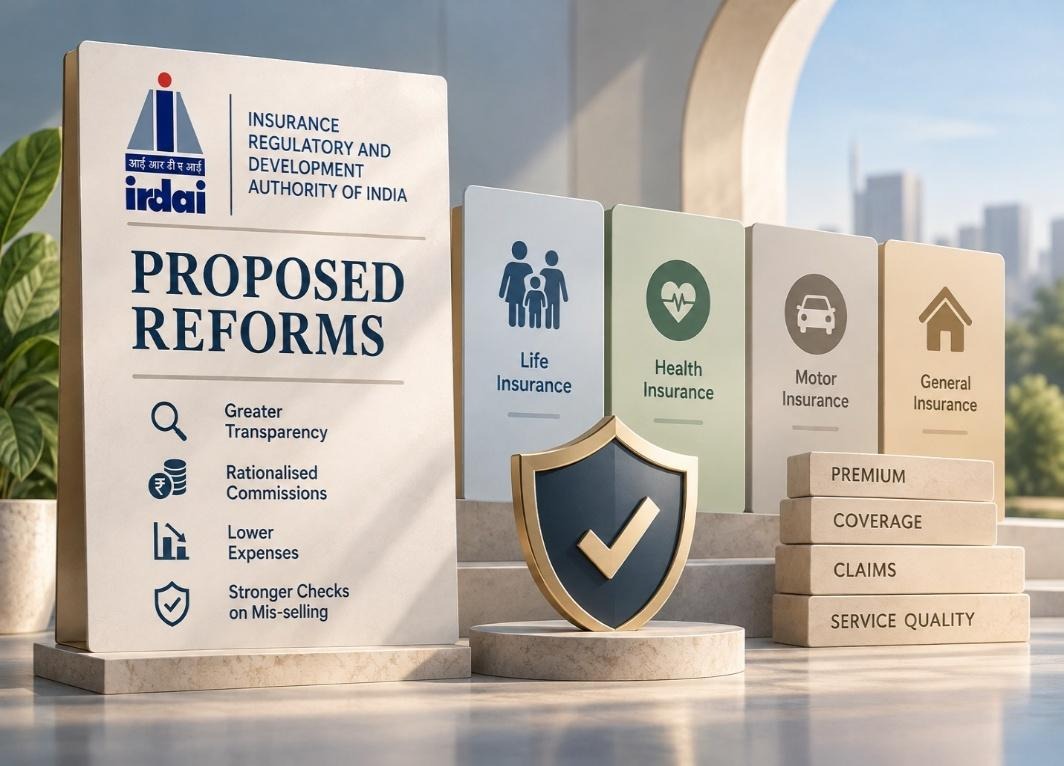
IRDAI has proposed changes to insurance distribution in India, focusing on greater transparency, expense management and protection against mis-selling. These are proposals right now and may change before final implementation.
What Does the Proposal Want?
- Greater transparency: Easier access to product information, premiums and claims-related details.
- Revised commission limits: Proposed limits may vary depending on the insurance product and distribution channel.
- Lower insurer expenses: IRDAI has proposed a gradual reduction in the Expense of Management limits for insurers. For life insurers, the limit could reduce to 12.5% over five years, while for general insurers, it could come down to 20%.
- Stronger checks: Greater focus on suitability and action against established cases of mis-selling.
What Does This Mean for You?
IRDAI’s proposals aim to improve transparency, but they do not automatically guarantee lower premiums. Understand the cover, compare the costs and choose a policy that suits your family’s needs, not just the one being sold to you.
Consider an officer comparing two health insurance policies. A lower premium alone may not make a policy better. Coverage limits, exclusions, waiting periods and claim service would also matter.
Similarly, an officer nearing retirement should review existing medical benefits and insurance coverage before purchasing additional protection, rather than buying a policy simply because it is recommended.
IRDAI proposals are subject to the final regulatory framework.
Buying Insurance? A Lower Premium Doesn’t Always Mean a Better Policy. Know What to Check →
Contributed by Yogesh Gola, Sr Relationship Manager, Advisory Desk, Hum Fauji Initiatives
What Did Our Clients Ask Us in the Last 7 Days?
Question:
Currently, Liquid Funds in My Portfolio Are Giving Higher Returns—So Why Not Use Them for the Long Term?
Our Reply:
It is a valid question, especially when liquid funds are currently delivering attractive returns. But the key is to understand that today’s return may not continue tomorrow.
Think of liquid funds as just a parking space for your money. They are useful for short-term needs, but would not be the correct investing avenue to achieve your long-term financial goals.

Why Not Rely on Them for the Long Term?
- Returns can fall: When short-term interest rates decline, liquid fund returns may also decrease.
- Inflation reduces purchasing power: After tax and inflation, your returns may not be enough to grow your wealth meaningfully.
- Long-term goals need growth: A suitable mix of equity, debt and other assets may help your portfolio achieve long-term goals, depending on your risk profile.
- What you’re experiencing today may not hold: Equity markets are currently not doing well, but that is a passing phase. Over long periods of time, equity generally delivers twice the returns expected from a liquid fund, of course, with a higher short-term risk.
In Simple Terms
- Money needed soon: Liquid funds.
- Money needed years later: Investments suited to your goals and risk profile.
The objective isn’t to avoid liquid funds, but to use them for the right purpose.
The best investment isn’t necessarily the one giving the highest return today, but the one that helps you achieve your financial goals over time.
Contributed by Team Prithvi, Hum Fauji Initiatives