
Asset-Rich but Cash-Poor: A Retirement Dilemma for Fauji Families
You have served the nation, secured your pension, bought a home and built investments over the years. Yet, after retirement, an unexpected medical bill, major home repair or family commitment can still put pressure on your finances. How?
Because owning wealth and having money readily available are two different things.
Consider a retired officer with a pension, a house worth ₹1.5 crore and investments worth ₹50 lakh. The family may be financially well-established, but if most wealth is tied up in property, meeting a large expense without disturbing long-term investments can be challenging.

Where Does the Challenge Arise?
- Property is not monthly income: Your home may appreciate, but it does not automatically pay your bills.
- Pension has limits: It can support regular expenses, but larger one-time commitments may require additional funds.
- Investments need planning: Selling investments at the wrong time or exiting before maturity may affect financial goals or involve costs.
How Can You Stay Prepared?
Keep adequate accessible funds for emergencies and near-term expenses. Map your pension against monthly household costs, then identify how investments will fund any shortfall or major future commitment.
Also, review whether your property and investments are aligned with your family’s needs. Any decision to sell, rent out or monetise property should be planned carefully.
For Fauji families, a pension provides a valuable foundation. The next step is ensuring that the rest of your wealth remains accessible when life demands it.
(Contributed by Anjeeta, Relationship Manager, Team Prithvi, Hum Fauji Initiatives)
The Hidden Cost of Travel: How to Plan a Holiday Without Breaking Your Budget
The holiday ends in a week. The credit card bill stays for months!
You plan a family holiday. Flights are booked, hotels confirmed, and the budget looks perfect. But then come airport meals, local taxis, sightseeing tickets, shopping, foreign currency charges and those tempting ‘optional’ experiences.
Suddenly, a ₹1 lakh holiday becomes ₹1.30 lakh!
Where did the extra money go? Not into one big purchase, but into dozens of small expenses nobody planned for.
The Holiday Budget: Your Financial Travel Companion
Before packing your bags, consider three simple steps:
- Plan the complete cost: Include transport, accommodation, meals, activities and hidden charges before deciding what you can afford.
- Create a holiday fund: Save a fixed amount every month. Let your next vacation be funded by savings, not expensive credit-card debt.
- Protect your financial future: Keep emergency savings intact and avoid disturbing long-term investments for a short-term pleasure.
Here’s a simple example: Saving ₹8,000 every month builds a ₹96,000 holiday fund in a year, before any interest. That’s a planned vacation, not an unexpected financial burden. Your coming back home also remains as pleasant as the holiday which you had looked forward to!
Money is meant to help you live well, not just accumulate in your account. But every rupee spent today has an opportunity cost tomorrow.
Plan your holiday like you plan your finances – with purpose, discipline and a little room for surprises.
Because the best souvenir is a beautiful memory, not a mountain of bills!
Your ₹1 Lakh Holiday Could Cost ₹1.30 Lakh. Here’s How to Avoid the Surprise →
(Contributed by Shruti Goyal, Relationship Manager, Team Vikrant, Hum Fauji Initiatives)
RBI’s Rate Hike: Is It Time to Review Your Mutual Fund Portfolio?
Have you ever wondered why an RBI interest rate announcement can affect your mutual fund investments – even when you haven’t made any changes?
The reason lies in how interest rates influence the stock and bond markets. The repo rate is the rate at which the RBI lends money to banks. Changes in this rate can influence borrowing costs, business activity and bond prices, and the effect could transmit down to all of us over a period of time.
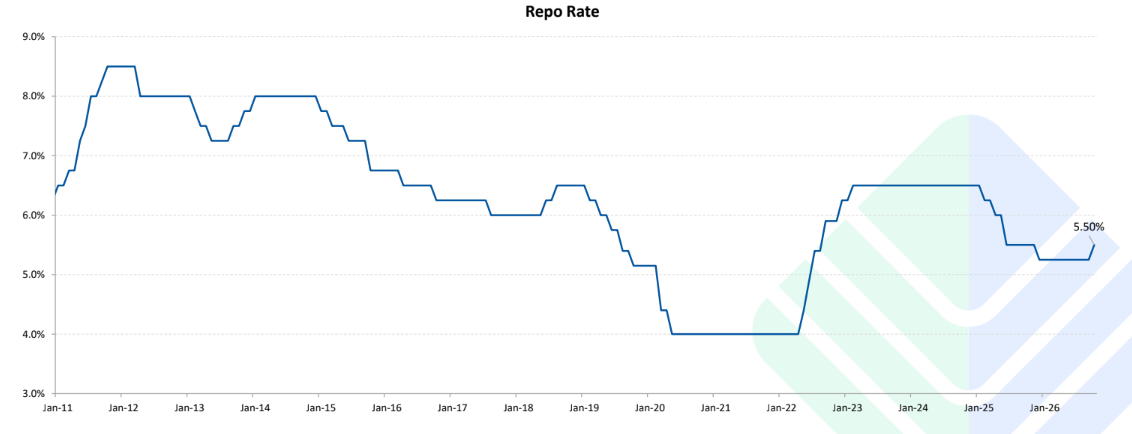
Source: Funds India
As the chart shows, the repo rate changes over time depending on economic conditions. But what does this mean for your investments? The impact differs for equity and debt mutual funds, so let’s understand what investors should consider.
Equity Mutual Funds: Don’t Let Headlines Drive Decisions
Higher interest rates can make borrowing more expensive for businesses and affect market sentiment, sometimes causing short-term market fluctuations. However, equity performance depends more on company earnings, economic growth and valuations.
If your financial goals and investment horizon remain unchanged, avoid stopping your SIPs simply because of an RBI announcement. Staying consistent can help you remain focused on long-term goals rather than short-term market movements.
Debt Mutual Funds: Understand What Changes
When interest rates rise, prices of existing bonds generally fall. Longer-duration debt funds are usually more sensitive to these changes, while shorter-duration funds tend to experience a smaller impact.
However, this does not mean you should switch funds immediately. Approach your financial advisor for advice on your fund’s duration, credit quality, investment horizon and liquidity needs before making changes.
What Should You Do?
- Keep investments aligned with your financial goals.
- Review your debt fund’s interest-rate exposure.
An RBI rate change is a reason to review your portfolio, not panic. Let your financial goals – not short-term market noise – guide your investment decisions.
RBI Raised Interest Rates. Should You Change Your Mutual Funds or Stay Invested? Find Out →
(Contributed by MF Alam, Assistant Manager – Research, Hum Fauji Initiatives)
What Did Our Clients Ask Us in the Last 7 Days?
Query
Can I withdraw my Provident Fund to repay my home loan principal? Will I have to pay taxes on PF withdrawal?
Our Response
Yes, you may be able to use your Employees’ Provident Fund (EPF) savings to repay your home loan, subject to the applicable EPFO rules and eligibility conditions.
Eligibility: The required service period and withdrawal limit depend on the type of withdrawal. Certain housing-related schemes allow eligible members to withdraw up to 90% of their PF savings after three years of membership, but this facility applies only under specific conditions.

Tax on Withdrawal: The tax treatment depends on your total continuous service across employers and the type of withdrawal. Generally, a final PF withdrawal after five years of continuous service is tax-exempt. If the withdrawal is made before completing five years, it may be taxable, and TDS may apply depending on the amount and applicable rules.
Should You Withdraw? Using your PF savings to repay the home loan can reduce your outstanding loan and future interest burden. However, it also reduces your retirement savings and the benefit of long-term compounding.
Before making a decision, it is advisable to compare the home loan interest rate with the expected growth of your PF savings and assess the impact on your retirement goals.
Should You Use Your PF to Repay Your Home Loan? Check the Tax and Retirement Trade-Offs →
(Contributed by Team Vikrant, Hum Fauji Initiatives)